
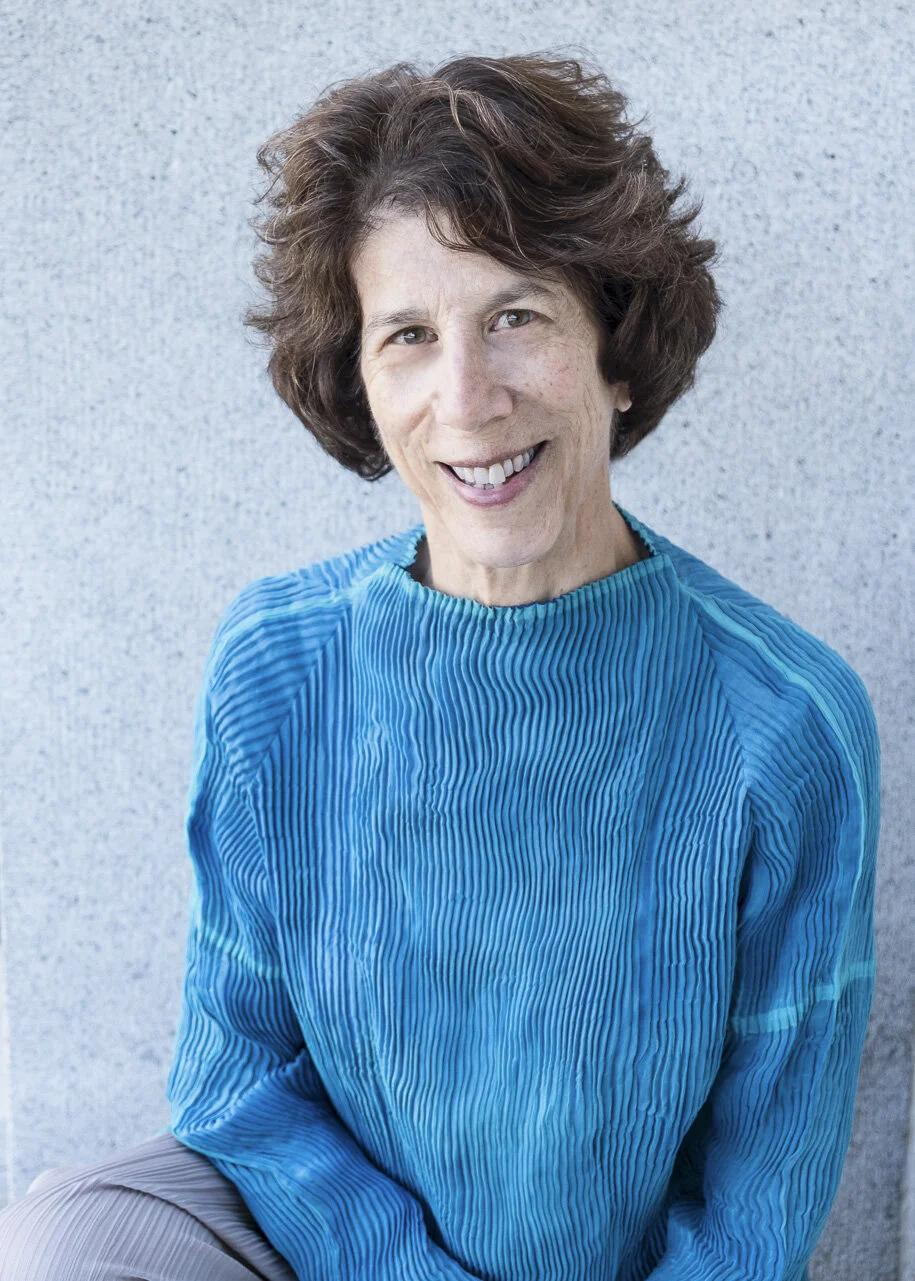
Dr. Barbara Tversky is Professor Emerita of Psychology at Stanford University and Professor of Psychology and Education at Teachers College, Columbia University. She studied cognitive psychology at the University of Michigan, where she took her B.A., M.A. and Ph.D., the last in 1969. Before settling at Stanford she held positions at the Hebrew University in Jerusalem, the University of Oregon and the University of Michigan.
She joined Stanford in 1978 and taught there until 2005, when she took early retirement and moved to Teachers College, Columbia University , a move that kept her research active rather than ending it. Her Stanford profile lists the years as 1978–2005; Wikipedia and FABBS give slightly different dates (1977 start, 2006 departure), so the 1978–2005 range is the one I've used here, consistent with Stanford's own record.
Her research has spanned an unusually wide range for a single career: memory, categorization, language, spatial cognition, event perception, diagrammatic reasoning, sketching, creativity, design, and gesture. The unifying question is how people think about the spaces they inhabit and the actions they perform and see , and then how they use the world, their own actions and their creations, to remember, think, create and communicate. She began working on visual and spatial thinking at a time when it was not only unexplored but dismissed as something that could be explained by language; her work is now cited widely not only by psychologists but by computer scientists, educators, architects and geographers. Her 2019 book, *Mind in Motion: How Action Shapes Thought*, provides an overview of that programme.
She has published over 200 scholarly papers and has been President of the Association for Psychological Science (2018–2019). She is a Fellow of the American Academy of Arts and Sciences (2013), the Association for Psychological Science (1995), the Cognitive Science Society (2002), the Society of Experimental Psychologists (2004) and the Russell Sage Foundation, and received the Kampé de Fériet Award in 2020. She was married to the psychologist Amos Tversky from 1963 until his death in 1996, and was the partner of Daniel Kahneman from 2020 until his death in 2024[reference:19].
Dr. Tversky's career is a case study in intellectual courage. She began working on visual and spatial thinking when the field treated it as a derivative of language, and she built a body of work that demonstrated otherwise , that the spaces we inhabit, the gestures we make and the diagrams we draw are not mere decorations on thought but part of how thought happens. That shift in framing is now so widely accepted that it is easy to forget it had to be argued for.
Her influence crosses disciplinary boundaries in a way that few psychologists achieve. FABBS notes that her work is cited by computer scientists, educators, architects and geographers as well as by her fellow psychologists, and that a persistent theme in her research is the relationship between cognitive systems and the technologies people use to augment them , from cave paintings to scientific diagrams to computer visualisations. That makes her unusually well suited to reviewing manuscripts at the intersection of psychology and design.
Manuscripts in cognitive psychology fail for recognisable reasons: an experimental design that cannot distinguish the hypothesised mechanism from a simpler alternative, a construct that is asserted rather than operationalised, or a theoretical claim that outruns the data. Dr. Tversky has spent a career designing studies that do distinguish those alternatives, and she brings that discipline to the manuscripts APC reviews.
The APC Leadership Team American Publication ConsultantsTell us about your manuscript and we will match you with the right expert from our team.
Get A Free Quote