
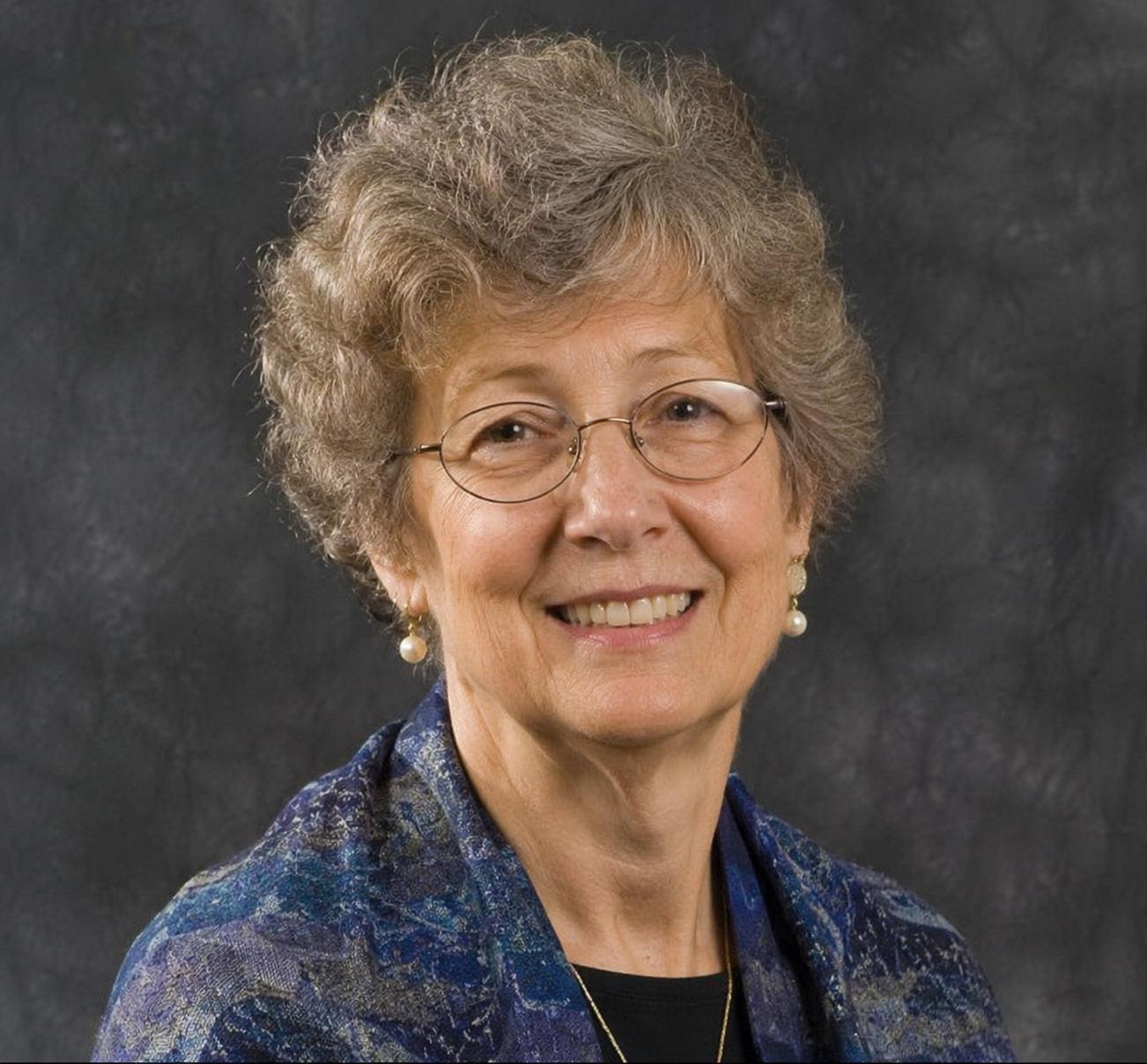
Dr. Dee Garrison was Professor Emerita of History and Women's Studies at Rutgers University, where she taught for 33 years before retiring in 2005. She joined the History Department at Livingston College in 1972 , a newly opened, experimental undergraduate college at Rutgers built around the motto 'Strength through Diversity' , and became a co-creator of the university's Women's Studies program, which she also chaired .
Her route into the profession was not the conventional one. Born in Cleburne, Texas in 1934 and raised in the Corpus Christi area, she married a military officer, had two sons, and travelled widely with her family while completing a B.A. at California State College at Fullerton and then a Ph.D. in History at the University of California, Irvine . That biography shaped her scholarship: she wrote about women whose intellectual and political lives had to be assembled from scattered archives, and she did it with a sympathy born of having done something similar herself.
Her first book grew directly out of her dissertation on the professionalisation and feminisation of public librarianship at the turn of the century. Published by Macmillan in 1979 as *Apostles of Culture: The Public Librarian and American Society, 1876–1920*, it was subsequently translated into Japanese and German and remains a standard reference in library history , and a point of departure for later scholars who argued with its conclusions . She then turned to women and protest movements. *Mary Heaton Vorse: The Life of an American Insurgent* (Temple University Press, 1989), a biography of the labor journalist, feminist and anti-war campaigner, was nominated for a Pulitzer Prize . Her final book, *Bracing for Armageddon: Why Civil Defense Never Worked* (Oxford University Press, 2006), drew on government documents to show how the civil defence programme of the 1950s and early 1960s collapsed under its own absurdity , and gave central place to the women's protest movement that exposed it .
She was perhaps proudest of two awards she received in the same year: a John D. and Catherine T. MacArthur Foundation grant for research on peace and international cooperation, and the Livingston College Alumni Teaching Award for inspirational teaching, both in 1995 . She served on the national selection committee for the Peace History Society's Charles DeBenedetti Prize from 1993 to 1998 and on the PHS Board of Directors from 1999 to 2002 . Her colleagues remembered her causes as 'social justice, women's rights, peace, and disarmament' and her person as 'gifted, lively, engaging, and totally dedicated' . She died peacefully in her sleep on 23 July 2009, aged 74, and is survived by her husband John Leggett, a Professor of Sociology at Rutgers, her two sons, and her stepdaughters .
Dr. Garrison's three books trace a single argument across three different subjects. *Apostles of Culture* asked how a profession became feminised and what that feminisation cost the women inside it; *Mary Heaton Vorse* asked what a woman's political life looks like when it is lived across decades of labor and peace organising; *Bracing for Armageddon* asked why the civil defence programme collapsed and found the answer partly in women's protest. Each is a different archive and a different method, but the question is the same: how do ordinary people, and especially women, act on the structures that constrain them?
That range is unusual and it is directly relevant to manuscript review. Historians frequently work within one archive and one methodological tradition; she moved between library records, biographical reconstruction and government documents, and she knew what counts as adequate evidence in each. The Pulitzer nomination for *Mary Heaton Vorse* is a fair measure of how well she did the biographical version of that work.
She was also, by the testimony of her own institution, an exceptional teacher , the Livingston College award is not a research prize , and she trained graduate students in two fields at once. Manuscripts in women's and peace history are often weakened by an argument that outruns its sources, or by a framing imported from theory that the archive cannot support. She spent a career holding those two in balance, and she brings that discipline to the manuscripts APC reviews.
The APC Leadership Team American Publication ConsultantsTell us about your manuscript and we will match you with the right expert from our team.
Get A Free Quote