
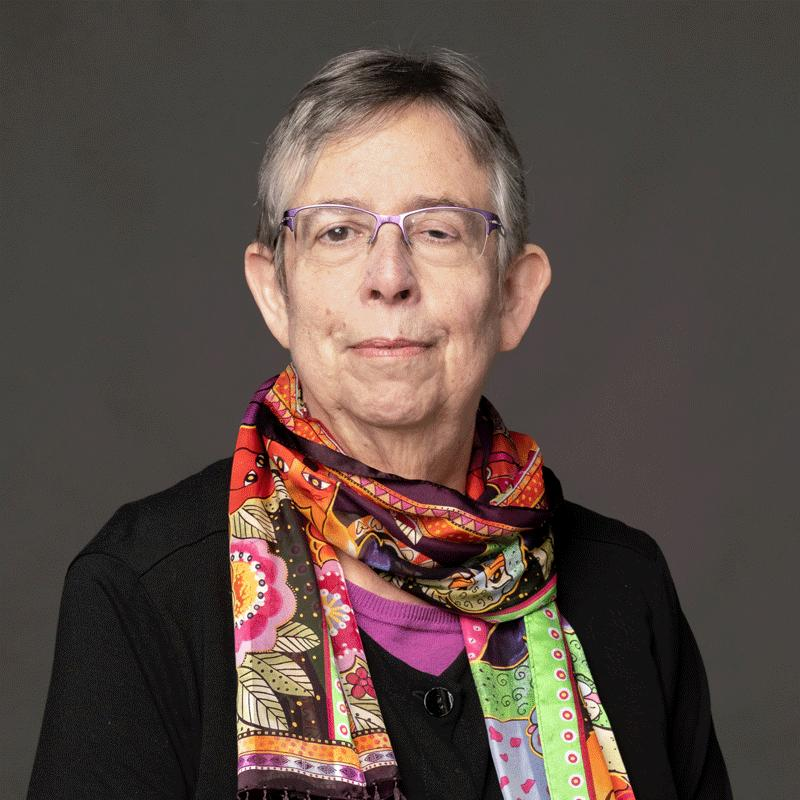
Dr. Edith Wyschogrod was the J. Newton Rayzor Professor of Philosophy and Religious Thought in Rice University's Department of Religious Studies, where she taught from 1992 until her service ended on 1 January 2003. She held the title of Professor Emerita of Religious Studies from 2003 . Before Rice she was Professor of Philosophy at Queens College of the City University of New York from the early 1970s until 1992 [reference:5].
Her route into the profession was not the conventional one. She took her A.B. at Hunter College in 1951 and her Ph.D. at Columbia in 1970 , returning to graduate school after raising a family, as her friend and colleague Mark C. Taylor put it, and going on to hold positions of considerable influence in the academy . That late start partly explains the intellectual fearlessness of the work: she came to philosophy as a second vocation and never treated its disciplinary boundaries as natural.
Her first book, *Emmanuel Levinas: The Problem of Ethical Metaphysics* (1974), was the first book on Levinas published in English , a fact that matters more than it sounds, since it is largely why Levinas became a mainstream figure in Anglophone philosophy of religion . She then extended the argument into far darker territory. *Spirit in Ashes: Hegel, Heidegger and Man-Made Mass Death* (Yale, 1985) asked what modern philosophy looks like once the death camps are taken as its central event rather than an aberration. *Saints and Postmodernism: Revisioning Moral Philosophy* (Chicago, 1990) and *An Ethics of Remembering: History, Heterology and the Nameless Others* (Chicago, 1998) together refuted the common charge that postmodernism is blind to ethics: remembering and forgetting, she argued, are never innocent but are ethical acts for which each person is responsible . Her final book, *Crossover Queries: Dwelling with Negatives, Embodying Philosophy's Others* (Fordham, 2006), moved into the philosophy of biology and questions of technology , evidence of a scholar who expanded rather than narrowed her range as she aged .
She was elected a Fellow of the American Academy of Arts and Sciences in 1999, was a Guggenheim Fellow in 1995–96, held a National Humanities Center fellowship in 1981, and served one term as President of the American Academy of Religion in 1993, delivering the presidential address 'Facts, Fiction, Ficciones: Truth in the Study of Religion' . William Parsons, then interim chair of Religious Studies at Rice, remembered her as 'a tremendous moral force' and 'a terrific role model for the department', adding that 'not only was her learning matched by an equally deep humility' . She died on 16 July 2009 in New York City, aged 79, and was survived by her husband, the philosopher and theologian Michael Wyschogrod, her son Daniel and daughter Tamar, and five grandchildren .
Dr. Wyschogrod's career can be read as a single sustained argument, pursued across five books in five quite different registers. The question is always the same: what do I owe the Other, and what does it cost to acknowledge that debt? She asked it first through Levinas, then through the death camps, then through postmodern ethics, then through memory and forgetting, and finally through the biology of altruism. Very few philosophers sustain one question that long without either repeating themselves or thinning the answer. She did neither.
The Levinas book is the hinge on which much of Anglophone philosophy of religion turns. Introducing a thinker is not a modest act , it changes what a field is able to discuss , and she did it in 1974, when the secondary literature barely existed. The later books are not applications of Levinas but arguments with him, and that is a harder and more valuable thing.
Manuscripts in philosophy of religion fail in characteristic ways: the primary literature is read at second hand, the argument is carried by a vocabulary rather than by reasons, or the position is attributed to a thinker who did not hold it. Dr. Wyschogrod spent a career reading the primary texts closely enough to disagree with them precisely, and she brings that standard to the manuscripts APC reviews.
The APC Leadership Team American Publication ConsultantsTell us about your manuscript and we will match you with the right expert from our team.
Get A Free Quote