
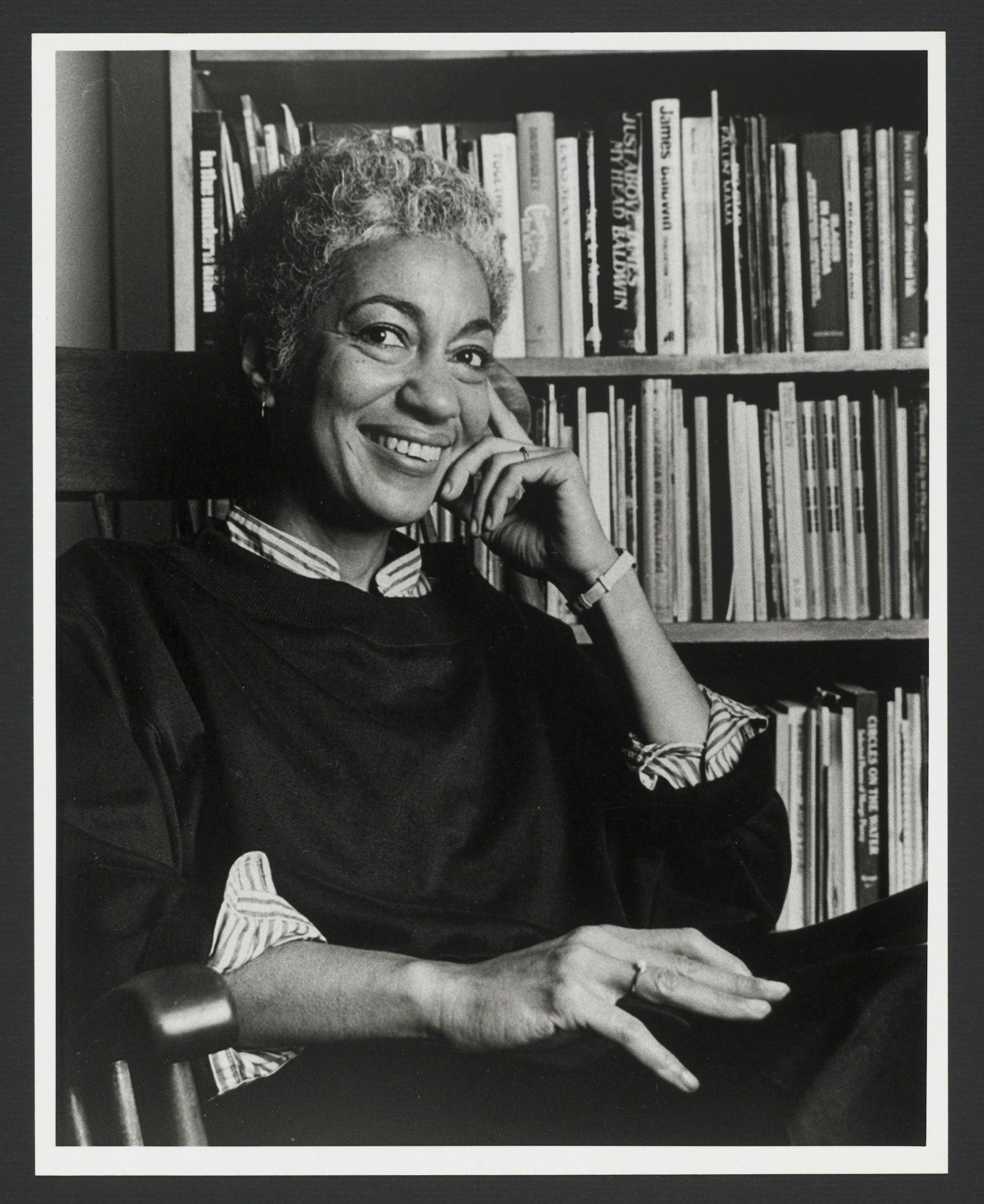
Prof. Esther Gordon Dotson was Professor Emerita of the History of Art at Cornell University, where she became the first woman appointed to a full-time professorship in the department. She took her A.B. at Vassar College summa cum laude in 1939 , elected to Phi Beta Kappa in her junior year and awarded the society's prize in her senior year , and completed her Ph.D. at New York University's Institute of Fine Arts in 1973 under Walter Friedländer, with a dissertation titled *Shakespeare Illustrated, 1770–1820* . She received tenure in 1977 and retired in 1989 .
Her teaching was the centre of her reputation. History of Art 240: Introduction to the Renaissance became one of the most popular undergraduate courses at Cornell in the 1970s and 1980s , and in 1986 she received the College Art Association's Award for Distinguished Teaching of Art History. The award was presented by Linda Nochlin , a pioneer of feminist art history who had been Dotson's own student at Vassar , and the citation, written by Ann Sutherland Harris, Julius Held and David Huntington, dwelt on 'the immense amount of personal care that she takes with every one of her students'. Accepting it, Dotson said: 'If I've been a good teacher, it's because I have had good teachers' .
Scholarly recognition followed the same line of inquiry. She was an authority on Michelangelo, publishing a two-part article in *The Art Bulletin* in 1979 that offered what is now regarded as a classic Augustinian interpretation of the Sistine Chapel ceiling; she was consulted on the ceiling's restoration and was received at the Vatican by Pope John Paul II in recognition of that work . Her 1982 *Art Journal* essay 'Shapes of Earth and Time in European Gardens' treated Renaissance gardens first of all as earth shaping, with an unusually original reading of the Sacro Bosco at Bomarzo . She also published in *Collier's Encyclopedia of Art* and served as editor-in-chief of the journal *Marsyas* .
Her last book grew out of a long fascination with the Austrian Baroque. *J.B. Fischer von Erlach: Architecture as Theater in the Baroque Era*, written with her former student and photographer Mark Richard Ashton, was published by Yale University Press in 2012, after her death . It argues that Fischer von Erlach's buildings for the emperor and his courtiers carry an unmistakably theatrical charge , an element earlier scholarship had noticed but not pursued. Dotson died on 28 October 2009, a week past her 91st birthday, after a long illness; her husband Arch Dotson, professor of government at Cornell, had died in 2006 .
Prof. Dotson's career makes an argument that is worth stating plainly: teaching and scholarship are not competing claims on a scholar's time. Her Sistine Ceiling articles changed how the ceiling is read, and her Introduction to the Renaissance course changed how several decades of Cornell undergraduates saw art. The College Art Association gave her its teaching award in the same period she was publishing the Michelangelo work , the two were not in tension.
Her range was wider than her reputation sometimes suggests. She moved from English Shakespeare illustration in the 1770s, to Michelangelo's theology of history, to Renaissance gardens as deliberate acts of earth-shaping, and finally to the theatricality of Habsburg Baroque architecture. Each of those is a different discipline's problem, approached with the same close attention to what the object actually is.
Manuscripts in art history usually fail on the relationship between evidence and interpretation: a corpus is too thin for the claim, or the frame is imported without being tested. Prof. Dotson spent a career holding those two in balance, and her students' testimony is that she demanded the same of them. That standard is what she brings, posthumously, to the manuscripts APC reviews.
The APC Leadership Team American Publication ConsultantsTell us about your manuscript and we will match you with the right expert from our team.
Get A Free Quote