
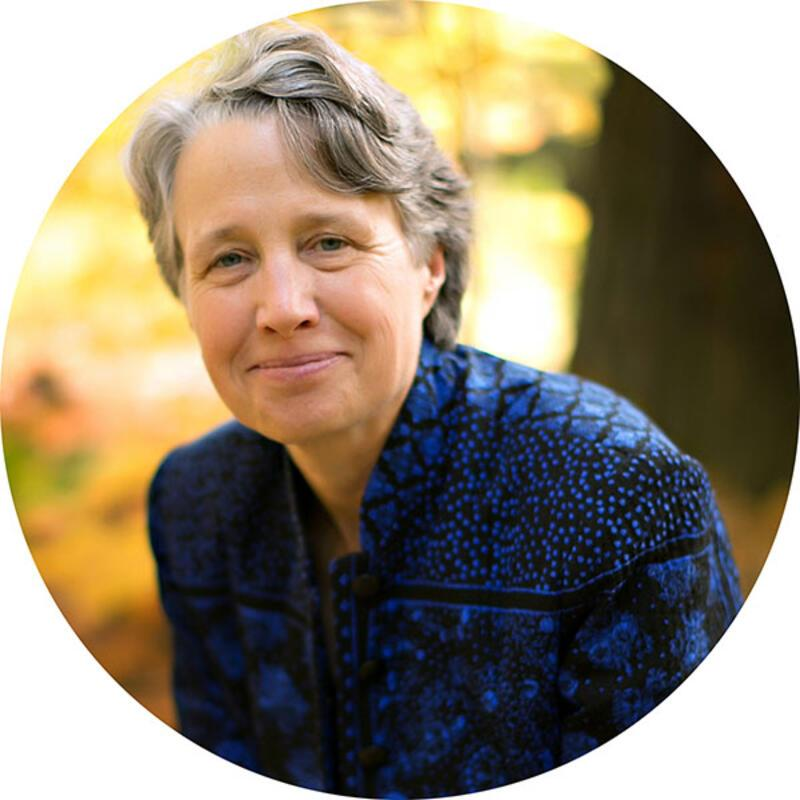
Dr. Katherine C. Ewel is Professor Emerita of Wetland Ecology and Management in the University of Florida's School of Forest, Fisheries, and Geomatics Sciences , the school known for most of her career as Forest Resources and Conservation. She took her A.B. in zoology at Cornell in 1966 and her Ph.D. in zoology at Florida in 1970, then spent two years as an instructor at Duke, where she sat in on H. T. Odum's systems ecology course at Chapel Hill and became interested in computer modelling . That encounter redirected her from mammalogy into ecosystem ecology, and the modelling habit stayed with her for the rest of her career .
She joined the Florida faculty in temporary posts in 1973 and was appointed Assistant Professor in Ecosystem Ecology in 1977, becoming the school's first female faculty member . Over the next two decades she worked on the ecology and management of wetland and upland forests and of lakes, with much of her wetland research directed at cypress swamps , including early work with Odum on using forested wetlands for municipal wastewater treatment, a project that led to the founding of the university's Center for Wetlands . Her 1979–80 Alpha Zeta Professor of the Year award came from that teaching, which included an undergraduate course in Wetland Wildlife Resources and a graduate course in Simulation of Ecological Models .
In 1994 she left Florida on a leave of absence to lead the new tropical wetlands research unit at the USDA Forest Service's Institute of Pacific Islands Forestry in Honolulu, where she served as Research Ecologist and Wetlands Team Leader and, from 2002, as Senior Scientist . The move took her into Pacific island mangrove forests and freshwater forested peatlands in Micronesia, and produced the work she is best known for. Her 1998 paper with Robert Twilley and Jin Ong, 'Different kinds of mangrove forests provide different goods and services', distinguished fringe, riverine and basin forests by the ecological services each provides , storm protection, productivity, and nutrient capture respectively , and it remains the standard framing in the field . She also monitored 1,748 mangrove seedlings on Kosrae for eight years, finding 36% annual mortality offset by high recruitment, and co-authored the 2007 *Science* warning piece 'A World Without Mangroves?' .
She retired from the Forest Service in March 2005, returned to Gainesville, and received emerita status from Florida in 2006; she has continued to publish on Pacific wetlands since, including a 2024 *Hydrobiologia* paper on long-term mangrove seedling growth . She was Vice-President of the Society of Wetland Scientists in 2003, President in 2004 and Past President in 2005, and is a Fellow of the Society . In August 2022 the University of Florida presented her with the Stephen C. O'Connell Distinguished Service Award at summer commencement, recognising a 35-year career across the university and the Forest Service , and, in the words of colleague Matthew Cohen, work that made wetland science 'more systems-oriented and empirical... but, as importantly, more inclusive' . She and her husband, the ecologist Jack Ewel, divide their time between Gainesville and a farm in northern Alachua County where they grow pine and other perennial crops .
Dr. Ewel's most cited contribution is a paper that seems obvious in retrospect, which is the mark of a genuinely useful idea. Before 1998, mangroves tended to be discussed as a single category. She and her co-authors showed that fringe, riverine and basin forests are functionally different systems delivering different services , shoreline protection, productivity, nutrient storage , and that treating them interchangeably produces bad management. That distinction now underpins how coastal protection and sea-level-rise vulnerability are assessed, and it came out of years of unglamorous field work on Pacific islands.
The Kosrae seedling study is the part of her record that best illustrates her method. Eight years, 1,748 individually monitored seedlings, and a result that complicates the intuition: very high mortality, but a stand that persists because recruitment is equally high. That is what ecological data actually looks like when someone commits to a long time series rather than a single season's sample, and it is why her modelling work carries weight , the models were built on measurements, not assumptions.
She was also, in a structural sense, a first: the first woman on the faculty of her school. Her colleagues' judgement is that she made the field more inclusive as well as more empirical. For manuscript review that combination matters. Wetland and ecosystem papers fail for recognisable reasons , a model whose parameters are unmeasured, a study period too short to support a successional claim, or a management recommendation that ignores which forest type is actually present. Dr. Ewel has spent a career getting exactly those things right, and she brings that discipline to the manuscripts APC reviews.
The APC Leadership Team American Publication ConsultantsTell us about your manuscript and we will match you with the right expert from our team.
Get A Free Quote